A Spiritual Itinerary in Florence: Discovering Churches, Basilicas, and Places of Worship
Fri, 11/13/2026 - 13:03
A cultural and spiritual itinerary exploring the connection between art, religion, and history in Florence.
One way to discover the history and art of Florence is to follow an itinerary focused on the deep connection between spirituality and art in the cradle of the Renaissance.
In the early modern era, churches played a central role in city life and received many donations for their embellishment, intended both to glorify God and to demonstrate the power and influence of the donor and his family. Most of the “testimonies” to Florence’s spiritual heritage are Catholic churches, although the city is also home to a synagogue whose copper dome rises imposingly against the Florentine skyline.
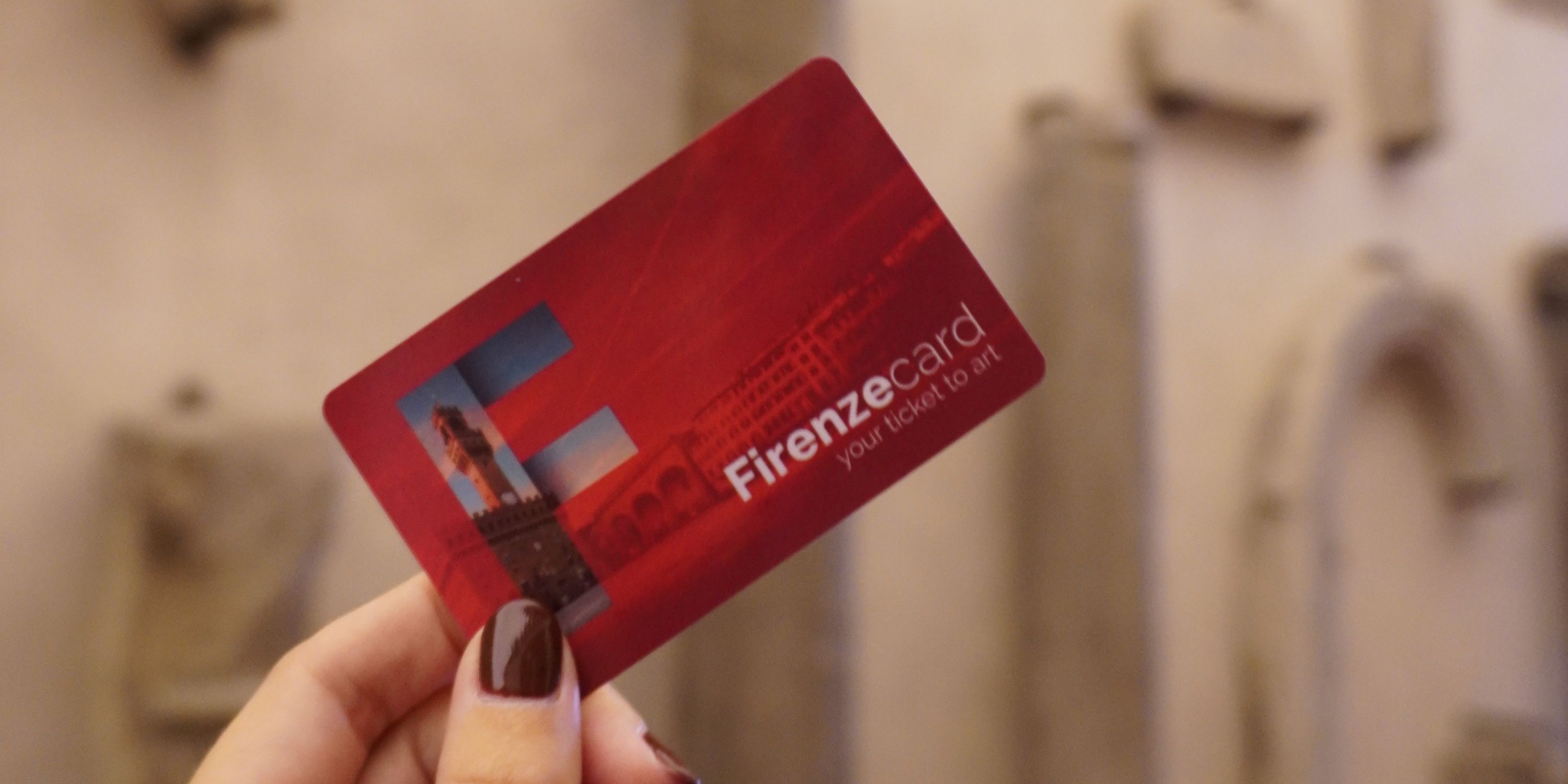
All the places of worship we’ll suggest you visit—which are, of course, included in the Firenzecard—are still places of prayer today; the larger basilicas have set aside a space dedicated to prayer, which you can freely access if you wish to pray. Therefore, please remember to always check the opening hours, as they may be closed to the public during religious holidays; the synagogue is always closed to visitors on Saturdays, the day set aside for rest and prayer.
1. Basilica of Santa Croce: Franciscan Art and the Pantheon of Italian Glories
The Basilica of Santa Croce is one of the oldest and most important monumental symbols of Christianity in Florence. It serves as an ideal starting point for a tour dedicated to the city’s spirituality and religious history.Its history is deeply intertwined with the Franciscan community that founded it and which, over the centuries, gained increasing influence in city life, especially during the 15th century.
The Church of Santa Croce was first mentioned in 1228, two years after the death of St. Francis, when he was canonized.
One of the basilica’s most significant spaces is the Bardi Chapel, decorated with frescoes by Giotto depicting episodes from the life of St. Francis. The scenes stand out for their humanistic and naturalistic style, in keeping with Franciscan thought, and serve as an important testament to the evolution of Italian painting.
In the 16th century, the basilica underwent a major renovation directed by Giorgio Vasari.
In the 19th century, Santa Croce took on a new significance in Italian historical memory, transforming from the city’s Pantheon into the Pantheon of Italian glories. Inside, there are tombs and monuments dedicated to illustrious figures such as Michelangelo and Niccolò Machiavelli.
Santa Croce is thus a place where Franciscan spirituality, art, history, and national memory are deeply intertwined.
Visiting time: 1.5 - 2 h
Price without the Firenzecard: 10,00 €
2. Basilica of Santa Maria Novella: The Dominicans’ Major Cultural Center
On the opposite side of the city from Santa Croce lies the Basilica of Santa Maria Novella, one of Florence’s most important religious complexes, historically linked to the Dominican Order.In the 14th century, the Dominicans distinguished themselves through their dedication to the study of philosophy, theology, Sacred Scripture, mathematics, and astronomy. The Florentine monastery thus quickly became a major hub of city life, thanks to the cultural expertise of its friars, their academic activities, and their involvement in the city’s political affairs.
The large church, its numerous side chapels, the monumental cloisters, the chapter house, and the refectory make this complex one of the city’s largest cultural centers, with at least 800 years of history to discover.
To explore all the spaces thoroughly, it is advisable to set aside about two hours for the visit.
Among the most interesting spaces is the so-called “Cappellone degli Spagnoli” (Great Chapel of the Spaniards), originally the chapter house of the Dominican convent, famous for its frescoes. This space offers an opportunity to understand the differences between the Franciscan figurative style found at Santa Croce—as seen in Giotto’s frescoes—and the more structured and elaborate style of the Dominican tradition.
Visiting time: 1.5–2 h
Price without the Firenzecard: 10,00 €
3. San Marco Museum: The Dominican Convent and the Frescoes by Beato Angelico
Although officially called the San Marco Museum, this space is actually a Renaissance convent that belonged, at the time, to the Dominican Order. The convent was founded in 1436 and built according to a design by Michelozzo, an architect associated with the Medici family.During the Renaissance, San Marco played a fundamental role in the religious and cultural life of Florence. Beginning in 1491, Fra’ Girolamo Savonarola served as prior of the convent; he was a complex and controversial figure who played an important role in the city’s political and religious affairs.
Throughout history, Savonarola has been described as an apocalyptic prophet, a political agitator, an opponent of Medici tyranny, a religious and social reformer, and an advocate for the common good. His political and religious rise ended tragically with his condemnation for heresy.
Visiting San Marco means stepping into the spaces where the Dominican friars lived, prayed, and meditated.
The tour begins on the ground floor, where you can visit the cloister, the refectory—the room where the community ate their meals—and the chapter house, used for meetings.
On the upper floor are the friars’ cells, decorated with extraordinary frescoes by Beato Angelico.
These paintings were not intended merely as artistic decorations. They served a specific spiritual purpose: to help the friars focus on the episodes from sacred history depicted in them and to guide them in meditation and prayer.
The frescoes in the cells of San Marco thus represent a significant example of how, during the Renaissance, art could serve as a tool for contemplation and spiritual practice, as well as an aesthetic expression.
Visiting time: 1 - 1.5 h
Price without the Firenzecard: 11,00 €
4. Florence Synagogue: Jewish Spirituality in the City
The Florence Synagogue is one of the most important places of worship for the city’s Jewish community.It was inaugurated in 1882, a few years after the emancipation of Italian Jews, which took place in 1861 with the proclamation of the Unification of Italy.
The building stands out for its richly decorated architecture and its imposing copper dome, which is one of the defining features of Florence’s skyline.
Even today, the synagogue remains an important center of Jewish life in the city, along with other community facilities, including the kindergarten and nearby kosher restaurants.
Set within a garden and surrounded by a cast-iron railing, the synagogue also houses the Jewish Museum, which preserves a significant collection of objects and furnishings related to domestic and private worship.
The museum tour offers insight into some key aspects of Jewish religious holidays and daily life.
From an architectural standpoint, the Florence Synagogue is one of Europe’s most significant examples of the exotic Moorish style, characterized by the presence of Arab and Byzantine elements, visible both on the exterior and in the interior.
The synagogue is closed to visitors on Saturdays, the day dedicated to rest and Jewish prayer.
Visiting time: 45' - 60'
Price without the Firenzecard: 9,00 €
5. Orsanmichele Church and Museum: The Church of Arts and Crafts
As you walk along Via dei Calzaiuoli, you'll come across the Orsanmichele Complex, one of Florence’s most important buildings dating back to the 13th and 14th centuries.Inside the church, you can admire Bernardo Daddi’s Madonna and Child (1347), housed in the monumental marble tabernacle created by Andrea Orcagna (1359), and a cycle of frescoes on the vaults dating from the late 14th century. The pillars depict the patron saints of the Florentine arts and crafts.
The first floor houses the Orsanmichele Museum, where the original statues of the patron saints of the Florentine guilds—commissioned for the building’s exterior niches—are preserved. The collection includes masterpieces of Renaissance sculpture in marble and bronze by artists such as Donatello, Lorenzo Ghiberti, Nanni di Banco, Andrea del Verrocchio, and Giambologna. The works originally displayed outdoors have now been replaced by replicas to ensure their preservation.
On the second floor, the large mullioned windows offer stunning views of the city of Florence.
Visiting Orsanmichele means discovering a place where Florence’s religious, economic, and artistic histories converge, featuring important examples of Renaissance sculpture.
Visiting time: 45'-60'
Price without the Firenzecard: 11,00 €
6. Brancacci Chapel: Frescoes by Masaccio, Masolino, and Filippino Lippi
In the Oltrarno neighborhood stands the Church of Santa Maria del Carmine, which houses the the Brancacci Chapel, famous for its extraordinary cycle of frescoes created by Masaccio, Masolino, and Filippino Lippi.The entrance to the chapel is through the doorway to the right of the brick facade.
Among Masaccio’s most famous frescoes, visitors can admire:
• The Expulsion from the Garden of Eden, one of the most famous depictions in the history of art.
• The Payment of the Tribute, which depicts Jesus pointing out to Peter a fish in the lake with a coin in its mouth—the coin needed to pay the tribute demanded by the tax collector.
The Brancacci Chapel is a must-see for anyone interested in Renaissance painting and Masaccio’s works in Florence.
Visiting time: 45' - 60'
Price without the Firenzecard: 15,00 €
7. Basilica of San Lorenzo in Florence: History, Architecture, and Artworks
The Basilica of San Lorenzo in Florence is one of the city’s oldest and most important churches and stands as one of the principal monuments of the Florentine Renaissance. Located in the square of the same name, in the historic center of Florence, it is closely linked to the history of the Medici family, who supported its reconstruction and helped transform it into one of the city’s most important artistic and religious centers.The origins of the Basilica of San Lorenzo date back to the early Christian era. According to tradition, the church was consecrated in 393 A.D. and served for a time as the cathedral of Florence.
The building’s current appearance stems primarily from the reconstruction begun in the 15th century at the behest of the Medici family. The architectural design was entrusted to Filippo Brunelleschi, one of the greatest architects of the Italian Renaissance, who conceived a space characterized by geometric balance, harmonious proportions, and formal simplicity.
One of the most recognizable features of the Basilica of San Lorenzo is its unfinished façade, which to this day lacks the marble cladding envisaged in the original plans.
Michelangelo Buonarroti also drew up a design for the basilica’s façade, but his proposal was never carried out. The building’s exterior therefore stands out as a unique feature among Florence’s churches.
The interior, on the other hand, is characterized by sober and elegant Renaissance architecture, featuring columns, round arches, and a rigorous spatial layout. The complex reflects the architectural principles developed by Brunelleschi and stands as one of the most significant examples of the early Renaissance in Florence.
The basilica houses important works of art from the Italian Renaissance. Among its most significant spaces is the Old Sacristy, designed by Filippo Brunelleschi and decorated with works by Donatello. It is considered one of the masterpieces of Renaissance architecture.
Also of particular note are the two bronze pulpits created by Donatello, which depict episodes from the Passion and Resurrection of Christ. These works represent one of the most important examples of the sculptor’s artistic exploration during the final years of his career.
Visiting time: 1 h
Price without the Firenzecard: 9,00 €
8. Salvatore Romano Foundation (o Fondazione Salvatore Romano): One of the Most Evocative Historic Spaces in the Santo Spirito Complex
The Salvatore Romano Foundation, located at Piazza Santo Spirito 29 in Florence, within the ancient refectory of the Augustinian convent of Santo Spirito, houses a precious collection of sculptures, architectural fragments, detached frescoes, and decorative works, dating from Roman times to the 17th century.The collection originated from a donation made by the antiquarian Salvatore Romano to the City of Florence in 1946, consisting of approximately seventy works of art selected during his career as a collector. Romano personally oversaw the arrangement of the works within the Cenacolo, creating an original display based on balance, symmetry, and the interplay between the sculptures and the room’s medieval architecture.
The museum houses an important fresco by Andrea Orcagna, painted around 1365, depicting the Crucifixion and the Last Supper, thus preserving the memory of its original religious function.
The collection consists primarily of medieval sculptures, along with fragments of architectural decoration, capitals, stone elements, detached frescoes, and furnishings from various periods.
The works engage in a dialogue with one another and with the architecture of the Last Supper through juxtapositions and contrasts of forms, materials, and meanings. Capital columns, column remains, and wooden supports help create an exhibition itinerary that also highlights fragments and vestiges of the past.
Among the most interesting features of the collection is the presence of numerous fragments from dismantled monumental complexes. Salvatore Romano chose to display them while preserving the traces of time, the missing parts, and the signs of their original use, thereby highlighting their history and artistic quality.
The exhibition itinerary includes works attributable to major figures in Italian sculpture, including Donatello and Tino di Camaino, and bears witness to the variety of artistic production from the Middle Ages to the modern era.
Visiting time: 30'
Price without the Firenzecard: 8,00 €
9. Museo dell’Opera del Duomo di Prato: Religion, Art, and History
The Museum of the Opera del Duomo in Prato, which opened in 1967 and was later expanded, houses paintings, sculptures, and sacred artifacts from the Cathedral of Santo Stefano and the entire Diocese of Prato.The exhibition unfolds in the historic rooms located beneath the cathedral’s presbytery and around the Romanesque cloister, offering an overview of the region’s artistic and religious history from the Etruscan period through the modern era.
The tour begins in the Museum Vaults, ancient chambers once used for burials, which feature coats of arms and frescoes of Prato’s leading families. From here, visitors enter the Chapel of Santo Stefano, frescoed by the Miniati brothers around 1420, and the Cathedral’s Romanesque cloister, dating back to approximately 1170 and characterized by white marble, green serpentine, and decorated capitals.
Among the most important works is the original balustrade of the Pulpit by Donatello and Michelozzo, created between 1434 and 1438 and decorated with a lively dance of cherubs. In the same room are the Capsella by Maso di Bartolomeo (1446), intended to house the relic of the Sacred Belt, and two glazed majolica pieces by Andrea della Robbia.
The museum also houses important Renaissance paintings, including Filippo Lippi’s The Funeral of Saint Jerome, a Crucifix attributed to Botticelli, and a detached fresco by Paolo Uccello depicting the Blessed Iacopone da Todi. The collection also includes archaeological finds dating from the Etruscan period to the 15th century, marble reliefs by Niccolò del Mercia, the Parato di Santo Stefano, and medieval sculptures, including a relief by Giroldo da Como from 1262.
The tour also includes access to the transept of the Cathedral of Santo Stefano, where there are five frescoed chapels. Among the most important are the Cappella Maggiore, with the famous cycle of the Stories of Saint Stephen and Saint John the Baptist painted by Filippo Lippi between 1452 and 1465; the Chapel of the Assumption, frescoed by Paolo Uccello in 1433–1434; and the Vinaccesi Chapel, decorated by Alessandro Franchi between 1873 and 1876.
Visiting time: 1 h
Price without the Firenzecard: 8,00 €
A Journey Through Spirituality, Art, and History in Florence and around
Visiting Florence’s places of worship means discovering a side of the city that goes beyond its most famous monuments and Renaissance masterpieces.From the Franciscan spirituality of Santa Croce to the Dominican culture of Santa Maria Novella and San Marco, from the frescoes of Beato Angelico to the Jewish synagogue, and on to the Anglican and Orthodox churches, each site reveals a different aspect of Florence’s religious and cultural history.
This itinerary offers insight into how art, faith, politics, and daily life have intertwined over the centuries, leaving Florence with a heritage of extraordinary historical, artistic, and spiritual value.