Florence in 3 Days: What to See
Mon, 11/09/2026 - 13:48
A 3 days itinerary with the Firenzecard
Visiting Florence in three days allows you to discover the city's main attractions, admire its most important monuments and explore some of the most iconic places of the Italian Renaissance.
This 72-hour itinerary takes you through the historic centre, museums, historic palaces and the Oltrarno district. Each day includes several stops, with information about the attractions to visit and suggested visiting times.
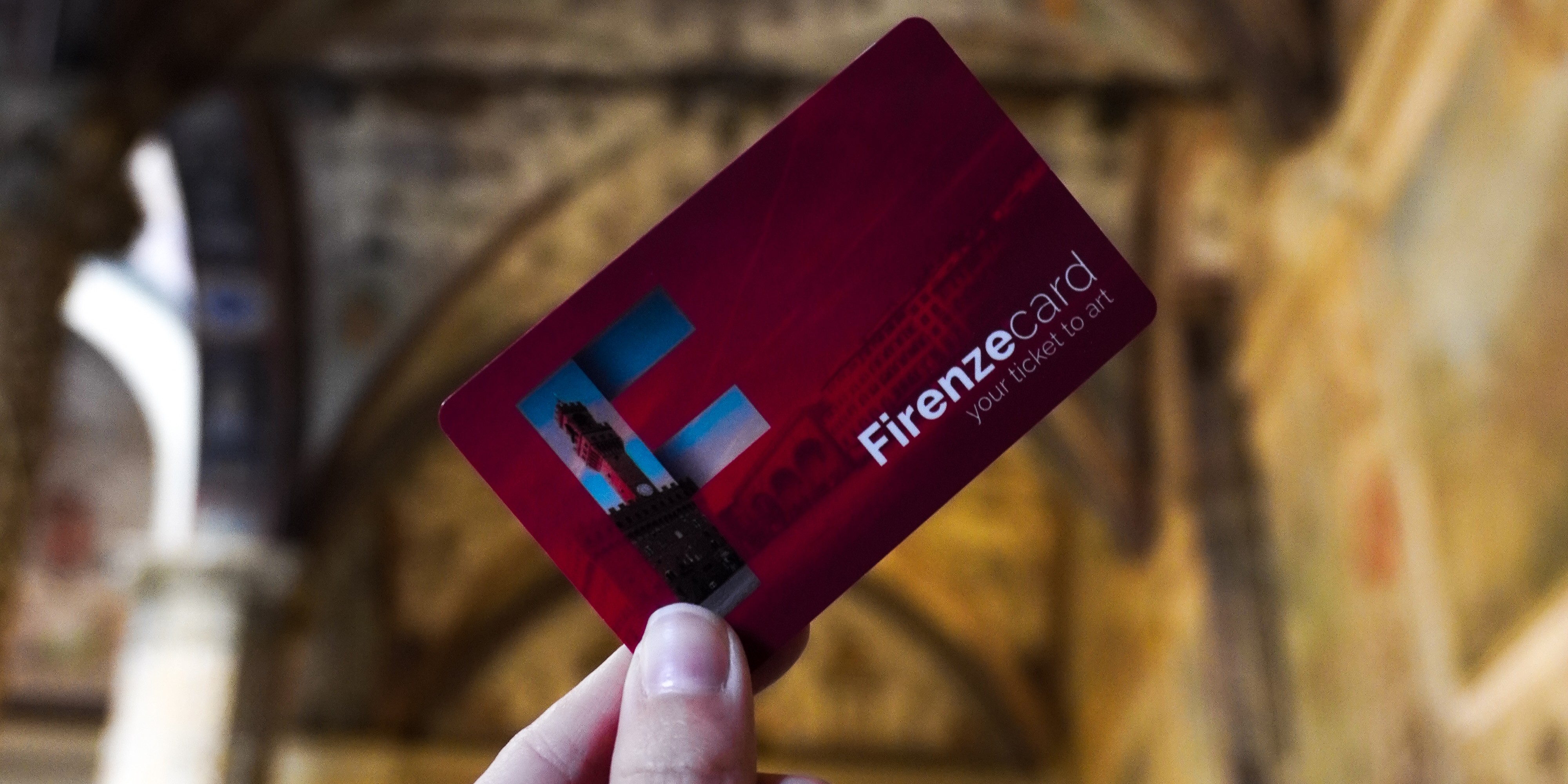
Admission tickets and museum reservations included in the itinerary are covered by the Firenzecard.
Day 1 in Florence: Palazzo Vecchio Museum, Orsanmichele and the Uffizi Gallery
The first day is dedicated to Florence's historic centre and some of its most famous monuments and museums.
Places to visit:
- Piazza della Signoria
- Palazzo Vecchio Museum
- Orsanmichele Church and Museum
- Uffizi Gallery
Total walking time: approximately 12–15 minutes.
Level: Easy, walk through the historic centre.
Total distance: approximately 1 km.
1. Piazza della Signoria: the heart of Florence's historic centre
The first stop on your three-day Florence itinerary is Piazza della Signoria, one of the city's most important squares and the heart of its social and political life.
Here you can admire some of Florence's most iconic monuments and works of art, including Palazzo Vecchio and the replica of Michelangelo's David.
2. Palazzo Vecchio Museum in Florence: history, art and power in the heart of the city
Palazzo Vecchio is one of Florence's most iconic landmarks and one of the buildings most closely associated with the city's political and institutional history. Built in 1299 as the seat of government of the Republic of Florence, it remained the centre of civic power for more than seven centuries. Today, it still houses Florence's City Hall.
The Palazzo Vecchio Museum offers visitors the chance to explore magnificent frescoed halls, monumental rooms and private apartments once used by the Medici court in the 16th century.
The Michelozzo Courtyard and the museum entrance
The museum visit begins in the Michelozzo Courtyard, accessed through the palace's main entrance. On either side of the doorway stand two important sculptures: a replica of Michelangelo's David and Baccio Bandinelli's Hercules and Cacus.
At the centre of the courtyard stands a replica of Andrea del Verrocchio's Putto with Dolphin, while the original is preserved on the upper floor of the palace.
The Hall of the Five Hundred and Michelangelo's Genius of Victory
Continuing along the museum route, you reach the Hall of the Five Hundred, one of the most spectacular rooms in Palazzo Vecchio.
The walls and ceilings of the grand staircase leading to the hall are decorated with an impressive cycle of paintings celebrating Cosimo I de' Medici and the city of Florence.
The Hall of the Five Hundred is further enhanced by a collection of statues, including Michelangelo's famous Genius of Victory, one of the most significant works housed inside the palace.
The Medici family's private apartments and Eleanor of Toledo's Chapel
On the second floor of Palazzo Vecchio, visitors can explore the private rooms once belonging to the Medici court.
These rooms feature elaborate decorations and furnishings that reflect the family's prestige and wealth.
One of the highlights is Eleanor of Toledo's Chapel, a small but richly decorated chapel featuring frescoes by Agnolo Bronzino.
The Hall of Geographical Maps
Towards the end of the visit, you will come across the Hall of Geographical Maps, one of the museum's most fascinating rooms.
It houses a large globe and 50 painted panels depicting the geographical knowledge of the 16th century and the contemporary understanding of the known world.
The Mezzanine Quarter and the Loeser Collection
The Mezzanine Quarter houses the Loeser Collection, a prestigious collection of medieval and Renaissance paintings and sculptures.
The collection was donated to the city of Florence by Charles Loeser, an American art historian and collector, and represents another important part of the artistic heritage preserved inside Palazzo Vecchio.
Visiting time: 2 hours.
3. Orsanmichele Church and Museum: the church of Florence's guilds
Walking along Via dei Calzaiuoli, you will reach the Orsanmichele Complex, one of Florence's most important buildings dating back to the 13th and 14th centuries.
Inside the church, you can admire Bernardo Daddi's Madonna and Child (1347), housed in the monumental marble tabernacle created by Andrea Orcagna (1359), as well as a cycle of late 14th-century frescoes decorating the vaults. The pillars feature representations of the patron saints of Florence's guilds.
The first floor houses the Orsanmichele Museum, where the original statues of the patron saints of the city's guilds are preserved. These sculptures were originally commissioned for the building's external niches.
The collection includes masterpieces of Renaissance marble and bronze sculpture by artists such as Donatello, Lorenzo Ghiberti, Nanni di Banco, Andrea del Verrocchio and Giambologna. The sculptures displayed outside have now been replaced with replicas to protect the originals.
On the second floor, the large Gothic windows offer beautiful views over Florence.
Visiting Orsanmichele means discovering a place where Florence's religious, economic and artistic history come together, with outstanding examples of Renaissance sculpture.
Visiting time: 1 hour.
4. Uffizi Gallery: one of the most important museums in the world
In the afternoon, return to Piazza della Signoria and visit the Uffizi Gallery, one of the most important museums in Europe and the world, renowned for its extraordinary painting collection.
The building was designed by Giorgio Vasari between 1560 and 1580 to house the administrative offices of the Grand Duchy of Tuscany. It originally housed the Medici family's art collection and was already accessible to a select audience in the 16th century.
The Uffizi Gallery contains works by some of the greatest artists in art history.
The exhibition follows a chronological order, allowing visitors to admire masterpieces spanning from the Middle Ages to the Renaissance and beyond.
Some of the most important artists represented in the collection include Giotto, Cimabue, Piero della Francesca, Paolo Uccello, Filippo Lippi, Botticelli, Leonardo da Vinci, Raphael and Michelangelo.
Among the most famous works are Botticelli's The Birth of Venus and Primavera, as well as Michelangelo's Doni Tondo.
The gallery also houses important collections of German, Dutch and Flemish paintings, featuring works by Dürer, Rembrandt and Rubens, as well as paintings by Goya.
The collection is further enriched by the Medici collection of ancient sculptures and busts, the Department of Drawings and Prints and the collection of self-portraits.
Visiting the Uffizi Gallery means embarking on a journey through the history of Italian and European painting, discovering some of the world's greatest artistic masterpieces.
Visiting time: 3 hours.
Day 2 in Florence: Accademia Gallery, Opificio delle Pietre Dure and Palazzo Medici Riccardi
The second day is mainly dedicated to Renaissance art, the history of the Medici family and some of Florence's most important museums and historic palaces.
Places to visit:
- Accademia Gallery
- Opificio delle Pietre Dure
- Palazzo Medici Riccardi
Total walking time: approximately 12–15 minutes.
Level: Easy, walk through the historic centre.
Total distance: approximately 1 km.
1. Accademia Gallery: home to Michelangelo's original David
The second day begins at the Accademia Gallery, located at Via Ricasoli 60, where you can admire Michelangelo's original David.
Unlike the replicas in Piazza della Signoria and Piazzale Michelangelo, the Accademia Gallery houses the authentic statue, one of the most famous masterpieces of Italian art and an essential stop for anyone visiting Florence.
In addition to David, the gallery houses an important collection of Michelangelo's sculptures, including the Prisoners and the unfinished St Matthew, as well as numerous 14th- and 15th-century paintings.
Another unique highlight is Giambologna's large terracotta model of the Rape of the Sabine Women, whose marble version can be admired beneath the Loggia dei Lanzi in Piazza della Signoria.
Visiting time: 2 hours and 30 minutes.
2. Opificio delle Pietre Dure: the museum dedicated to restoration techniques
The Opificio delle Pietre Dure is one of the world's leading art restoration institutes. Its museum, established in 1882, tells the story of the artistic workshop founded in 1588 by Grand Duke Ferdinando I de' Medici, which specialised in working with semi-precious stones.
The collection includes works produced over more than three centuries and introduces visitors to the commesso technique, an elaborate artistic process that uses precious and semi-precious stones to create decorative designs and images.
Among the most significant works are those created for the monumental semi-precious stone altar in the Chapel of the Princes, inside the Basilica of San Lorenzo.
The exhibition explains every stage of the production process, from the initial design to the finished artwork, offering insight into one of Florence's most important artistic and craft traditions.
Visiting time: 1 hour.
3. Palazzo Medici Riccardi: the Medici family's first residence
Palazzo Medici Riccardi is one of the finest examples of Renaissance civil architecture in Florence.
Commissioned in 1444 by Cosimo the Elder and designed by architect Michelozzo, it served as the residence of the Medici family, including Lorenzo the Magnificent, and hosted numerous important political figures.
Among the most important rooms to visit are:
- Chapel of the Magi: home to the famous fresco cycle painted by Benozzo Gozzoli in 1459, depicting the Procession of the Magi and featuring members of the Medici family and Galeazzo Maria Sforza.
- Hall of Mirrors, or Luca Giordano Gallery: a magnificent Baroque room decorated with a large ceiling fresco by Luca Giordano, celebrating the Apotheosis of the Medici family.
Visiting Palazzo Medici Riccardi means discovering the history of the Medici family and admiring important examples of Florentine Renaissance and Baroque art.
Visiting time: 1 hour and 30 minutes.
Day 3 in Florence: Brancacci Chapel, Palazzo Pitti and Boboli Gardens
The final day of the itinerary is dedicated to the Oltrarno, the district of Florence located on the southern bank of the River Arno.
This area is home to important artistic and architectural landmarks, including the Brancacci Chapel, Palazzo Pitti and the Boboli Gardens.
Places to visit:
- Brancacci Chapel
- Palazzo Pitti
- Boboli Gardens
Total walking time: approximately 15 minutes.
Level: Easy, walk through the historic centre.
Total distance: approximately 1 km.
1. Brancacci Chapel: frescoes by Masaccio, Masolino and Filippino Lippi
The third day begins in Piazza del Carmine, in the Oltrarno district, where the Church of Santa Maria del Carmine is located.
The church houses the Brancacci Chapel, famous for its extraordinary fresco cycle painted by Masaccio, Masolino and Filippino Lippi.
The entrance to the chapel is through the doorway to the right of the church's brick façade.
Among Masaccio's most famous frescoes are:
- The Expulsion from the Garden of Eden: one of the most celebrated representations in the history of art.
- The Tribute Money: depicting Jesus pointing Peter towards a fish in the lake, with a coin in its mouth, needed to pay the tax demanded by the tax collector.
The Brancacci Chapel is an essential stop for anyone wishing to discover Renaissance painting and Masaccio's works in Florence.
Visiting time: 1 hour.
2. Palazzo Pitti: one of Florence's most important historic palaces
After visiting the Brancacci Chapel, make your way to Palazzo Pitti.
Palazzo Pitti is one of Florence's most important historic buildings. Constructed in the mid-15th century at the request of Florentine banker Luca Pitti, it was purchased in 1550 by Cosimo I de' Medici and his wife, Eleanor of Toledo, to become their new grand-ducal residence and a symbol of the Medici family's power in Tuscany.
Over the centuries, it also served as a residence for the House of Habsburg-Lorraine and the House of Savoy, whose members lived there as Kings of Italy from 1865.
Its monumental façade is approximately 200 metres long and more than 30 metres high.
Today, Palazzo Pitti houses several museums and collections, including:
- Treasury of the Grand Dukes: preserves the precious Medici Treasure, featuring semi-precious stone vases, rock crystal, amber, ivory, silverware and jewellery dating from the 17th to the 20th centuries.
- Palatine Gallery and Imperial and Royal Apartments: houses around 500 works selected from the finest Medici collections. It boasts an extraordinary collection, including the world's largest concentration of Raphael's paintings, alongside works by Titian, Tintoretto, Caravaggio and Rubens.
- Gallery of Modern Art: its collections of paintings and sculptures span from the late 18th century to the early decades of the 20th century.
- Museum of Costume and Fashion: dedicated to the history of fashion, haute couture, changing styles and clothing traditions throughout the centuries.
Visiting Palazzo Pitti means discovering the history of the dynasties that ruled Florence and admiring important art collections, historic interiors and treasures of Florentine cultural heritage.
Visiting time: 3 hours.
3. Boboli Gardens: a relaxing walk through greenery in the heart of Florence
After visiting Palazzo Pitti, take some time to explore the Boboli Gardens, one of Florence's most enchanting places and the perfect setting for a relaxing walk among beautiful green spaces.
The gardens are one of the finest examples of an Italian-style garden. This open-air museum covers a vast green area, enriched with ancient and Renaissance statues, monumental grottoes and spectacular fountains, including the Fountain of Neptune and the Ocean Fountain.
One of the main highlights is the Buontalenti Grotto, designed by Bernardo Buontalenti.
Visiting the Boboli Gardens means discovering a remarkable historical, artistic and landscaped heritage closely connected to Palazzo Pitti and the history of court life in Florence.
Visiting time: 2 hours.